What can we learn from illusions that helps us manage projects better?
Just had the opportunity to watch a BBC documentary about illusions. The show went on to detail how we as humans get deceived by our own senses. There were 3 things that opened my eyes in that documentary: The things that caused me to think were: when we mix senses one of them tends to …
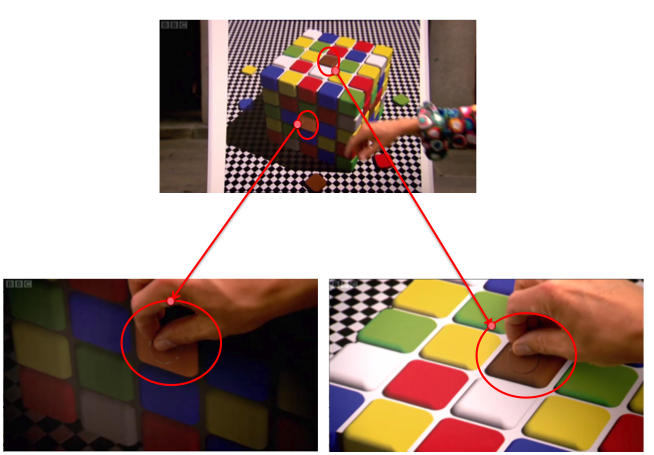
Just had the opportunity to watch a BBC documentary about illusions.
The show went on to detail how we as humans get deceived by our own senses. There were 3 things that opened my eyes in that documentary:
The things that caused me to think were:
- when we mix senses one of them tends to take over: this is the case when we are watching a magic act. The example on the documentary was a magician throwing a ball in the air for a few times, and then making the same gesture but keeping the ball in his had. Although the subjects eyes stayed on the face of the magician, the brain perceives the movement of the ball and later realizes that the ball has vanished.
- some of our senses are completely/100% contextual (see image above): the example they had here is a cube with many small squares on it’s faces. Some faces are lighter, others are darker. When asked about the difference between 2 specific squares in the faces of the cube people would clearly state that the colors were different. However, when you moved one of the squares to the other face of the cube, you could see that the colors were exactly the same! Our perception of color was completely dependent on the colors surrounding the colors we were comparing.
- we can learn new senses if we are exposed to the right stimuli: The amazing examples they had for this was a blind-person that had learned to use sound and echo to see and used that learned sense to ride a bike (while blind!) The second example was quite amazing. A person would use a belt what was wired with buzzers/vibrators (like mobile phones) so that they could constantly feel where the magnetic north was. Later they would use that learned sense to navigate their way in a place while blind folded!
All of these observations from the documentary point to one thing. We are not wired to perceive reality. We jump to conclusions far too quickly, but we can also take advantage of that if we train our brain with the right stimuli! That was the most interesting find from this documentary.
The implications are huge in a software project setting, where it is quite common that people use only a very small number of stimuli (some reports, a couple of graphs, etc.) to jump into conclusions. We need to “learn” how to sense the status of a software project, and that can be done by following the example of the person who was taught how to “feel” the magnetic north…
Can you think of applications of this knowledge in your project?
Keep the conversation going
The essays work best in company. Join the community to keep the questions coming.